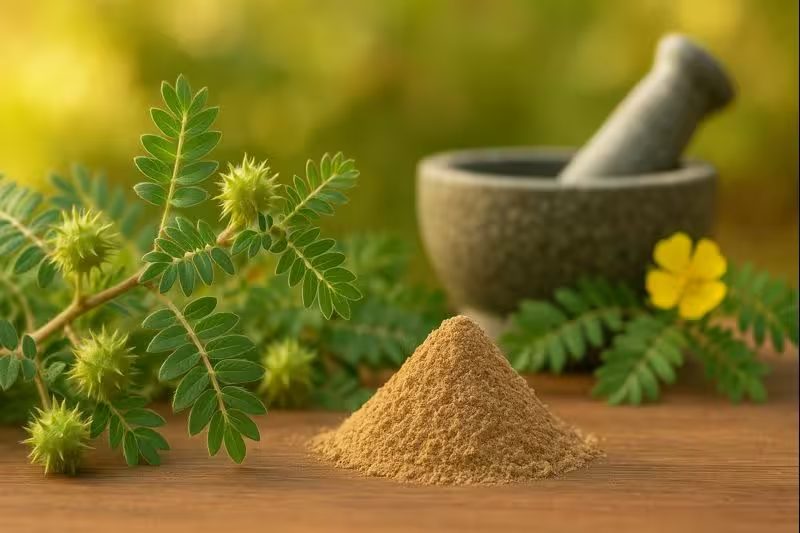
Most of us only notice Nerunji Mull when it pricks our feet. For a long time, I saw it as a nuisance—until a family conversation changed my perspective.
My uncle first mentioned using the plant to help his wife with kidney stones, a remedy passed down through his colleagues. Intrigued, I looked into it further and discovered that this “weed” is actually a cornerstone of herbal wellness, frequently cited for kidney health, digestion, and hormonal balance.
This article isn’t medical advice; it’s a record of what I’ve learned about how Nerunji Mull has been used across generations.
📑 Table of Contents
What is Nerunji Mull and Its Types
Nerunji Mull is more than just a thorny nuisance underfoot. This humble nerunji mull plant is actually a small herb with big traditional significance. In Siddha and Ayurvedic practice, the whole plant—leaves, stems, fruit, and seeds—is considered useful. But the part most often discussed in remedies is the thorny fruit, or "mull".
There are three main types of Nerunji Mull:
- Siru Nerunji – The small variety, traditionally regarded as one of the most potent natural herbs for supporting testosterone levels and male reproductive health. It's scientifically known as Tribulus terrestris (which is called Nerunji Mull in Tamil).
- Peru Nerunji / Yanai Nerunji – The larger variety, often used for broader urinary and kidney support.
- Seppu Nerunji – A less common type, used in certain local remedies and medicinal preparations.
While all types have traditional uses, this article will focus mainly on Siru Nerunji, because it's the one most researched and widely cited for hormonal support, kidney health, and male fertility.
Nerunji Mull Uses: Traditional Benefits & Applications
The nerunji mull benefits recognized in traditional medicine span several wellness areas. Every part of the nerunji mull plant—from its leaves to its thorny fruit—has been utilized in traditional remedies for:
- Urinary & Kidney Health – Support for urine flow, urinary comfort, kidney stones, and overall urinary tract balance
- Prostate & Age-Related Urinary Support – Traditionally used by men over 40 to support comfortable and regular urination
- Hormonal & Reproductive Support – Especially Siru Nerunji, associated with vitality, stamina, and fertility
- Digestive & Internal Balance – Traditionally linked with digestion, liver–kidney balance, and inflammation support
Nerunji Mull for Kidney Stones and Urinary Health
Nerunji Mull is traditionally celebrated for supporting urinary health, especially in managing kidney stones and related urinary issues. It’s not a shortcut or instant cure, but a gentle aid that works alongside the body’s natural processes.
Kidney stones often cause discomfort not while resting in the kidney, but when they move down the urinary tract. Traditionally, Nerunji Mull is used to reduce irritation along urinary passages, assist the natural passage of small stones, and help heal minor tears caused by stone movement.
The herb is also valued for urinary tract infections, acting as a mild anti-inflammatory and diuretic, which helps flush excess fluids and toxins from the body.
What Does “Diuretic” Mean in Simple Terms?
In traditional understanding, a diuretic is something that helps the body release excess retained water through urine.
Many people notice this excess water as leg or foot swelling, especially:
- After long bus, train, or flight travel
- When standing for long hours without movement
- During hot weather or dehydration
Traditionally, Nerunji Mull is believed to support this process by encouraging urine flow and reducing internal water retention. Because of this, elders often associate it with relief from heaviness, stiffness, or swelling felt in the legs after travel or prolonged standing.
This effect is also traditionally linked to its anti-inflammatory nature, which is believed to calm irritation in the urinary passages while helping the body flush excess fluids naturally.
Hormonal Support and Testosterone Benefits
While all varieties have their uses, Siru Nerunji (Tribulus terrestris) is the most sought-after for male hormonal health. Traditional practitioners value it as a natural way to maintain vitality without the need for synthetic alternatives.
Key Traditional Benefits:
- Vitality & Energy: Historically used to address low stamina and age-related energy decline.
- Testosterone Support: Traditionally believed to support the body's natural production of testosterone, essential for muscle strength and libido.
- Fertility & Cooling: Traditionally valued for its "cooling" properties, which practitioners believe helps maintain the optimal environment for sperm quality and reproductive health.
How It’s Taken Traditionally
Siru Nerunji is often consumed as a fine powder, sometimes blended with Neermulli (Marsh Barbel) seeds for added effect. Rather than a daily habit, it is typically taken in small doses during specific periods when a boost in energy or reproductive health is desired.
🛡️ Essential Safety Checklist
Before you start using Nerunji Mull, keep these traditional and practical safety guidelines in mind:
- Hydration is Mandatory: Because this herb is a natural diuretic, you must drink plenty of water daily. If you notice excessive urination without drinking enough water, stop use and hydrate immediately.
- The "Two-Week" Rule: Traditional practitioners recommend using it daily for a maximum of 14 days. Long-term daily use can lead to electrolyte imbalance, fatigue, or weakness.
- Intermittent Use is Best: For general health, taking it once a week is often sufficient and safer than daily consumption.
- Avoid if Pregnant/Nursing: It is traditionally believed to potentially reduce milk secretion and may affect hormonal balance during pregnancy.
- Listen to Your Body: If you feel unusually tired, dizzy, or develop a dry mouth, reduce the dosage or take a break.
How to Use Nerunji Mull Powder: Traditional Preparation Methods
To experience the full nerunji mull powder benefits, it must be prepared correctly to ensure the active compounds are extracted safely. To avoid confusion and overuse, we have broken down the most common ways to use Nerunji Mull powder into simple, step-by-step instructions.
Method 1: The "Kashayam" (Mild Decoction)
Best for: Urinary tract comfort, flushing excess water retention (swelling), and "cooling" the body.
- Measure: Take 5 grams (approximately 1 leveled teaspoon) of Nerunji Mull powder.
- Combine: Add the powder to 2 tumblers (approx. 400ml) of fresh water in a small pot.
- Reduce: Boil on low-to-medium heat. Watch the pot until the liquid reduces to ½ tumbler (approx. 100ml). This concentration process is key to traditional healing.
- Strain: Pour the mixture through a fine mesh strainer or clean cloth into a cup.
- Cool: Allow it to reach a warm, drinkable temperature.
- Dosage: Drink in two portions—half in the morning and half in the evening.
- Duration: Follow this for 3–7 days. Do not exceed one week of daily use.
Method 2: Direct Powder Intake
Best for: Kidney stone support and maintaining hormonal vitality/stamina.
- Measure: Use exactly 1 gram (a small pinch) of fine Nerunji Mull powder.
- Mix: Stir the powder into a cup of warm milk or warm water.
- Dissolve: Stir thoroughly to ensure there are no dry clumps.
- Consume: Drink it slowly, ideally 30 minutes after a light meal.
- Dosage: Once in the morning and once in the evening.
- Duration: Follow the "Two-Week Rule"—maximum 14 days of continuous use before taking a long break.
💡 Tips for Effective Preparation
- Avoid Metallic Aftertaste: If using a decoction, try boiling the water in a clay or stainless steel pot rather than aluminum to keep the taste neutral.
- Stomach Sensitivity: If you have a sensitive stomach, taking the powder after food is gentler on digestion and helps prevent minor nausea.
- Don't Reheat: For the best nerunji mull powder benefits, try to drink your Kashayam fresh. If it sits for more than 12 hours, it may lose its traditional potency.
- Proper Storage: Keep your Nerunji Mull powder in an airtight glass jar. Moisture is the enemy here; it can cause clumping and reduce the shelf life of the herb.
Who Can Take Nerunji Mull & Important Precautions
Nerunji Mull is generally suitable for adults when used in moderate and mindful quantities. However, like all traditional herbs, it may not suit everyone and should be used with awareness.
- General adults can take Nerunji Mull as a supportive herb, especially for urinary discomfort or stone-related irritation.
- Traditionally, Nerunji Mull is used as a supportive or companion remedy, not as a standalone cure or replacement for medical treatment.
- When proper water intake is maintained, the herb is generally considered gentle and manageable for most people.
What Nerunji Mull Is NOT
Traditionally, Nerunji Mull is viewed as a supportive herb, not a miracle cure.
- It is not a quick solution for large or severe kidney stones
- It does not replace medical treatment for infections or chronic conditions
- It is not meant for continuous high-dose use
- Results, if any, are gradual and depend on hydration, diet, and individual body type
Understanding these limits helps use Nerunji Mull responsibly and safely.
Closing Thoughts
What stands out about Nerunji Mull is not any single claim, but how consistently it appears across different areas of traditional health—urinary comfort, kidney support, hormonal balance, digestion, and age-related changes.
Rather than being positioned as a miracle solution, it is traditionally respected as a supportive herb—one that works best when combined with proper hydration, moderation, and awareness of the body.
Disclaimer: This guide is based on traditional Ayurvedic practices and is for educational purposes only. It is not a substitute for professional medical advice. Always consult a healthcare provider before use, especially if you are pregnant, nursing, or have a medical condition.
Frequently Asked Questions
Can Nerunji Mull dissolve kidney stones?▼
How should I consume Nerunji Mull?▼
What is the recommended dosage of Nerunji Mull?▼
Is Nerunji Mull safe for everyone?▼
Why is hydration so important when taking Nerunji Mull?▼
Related Blogs
Home Remedy for Burning Sensation When Urinating Due to Body Heat (Soodu Pidithal)
Learn how to stop burning sensation when urinating using a simple home remedy with warm gingelly oil. Get quick relief from urine burning caused by excess body heat (soodu pidithal).

Ayurvedic Remedy for Kidney Stone: Effective Home & Natural Remedies
Discover a proven Ayurvedic remedy for kidney stone relief. Explore safe, natural remedies for kidney stones and home treatments like banana stem, coconut water, and barley water.
How to Reduce Pitta: Simple Natural Remedies for Balance
Struggling with acidity, anger, or skin rashes? Learn how to reduce Pitta dosha naturally. Learn remedies, diet changes, and quick relief methods to balance Pitta dosha and improve digestion, skin, and overall health.