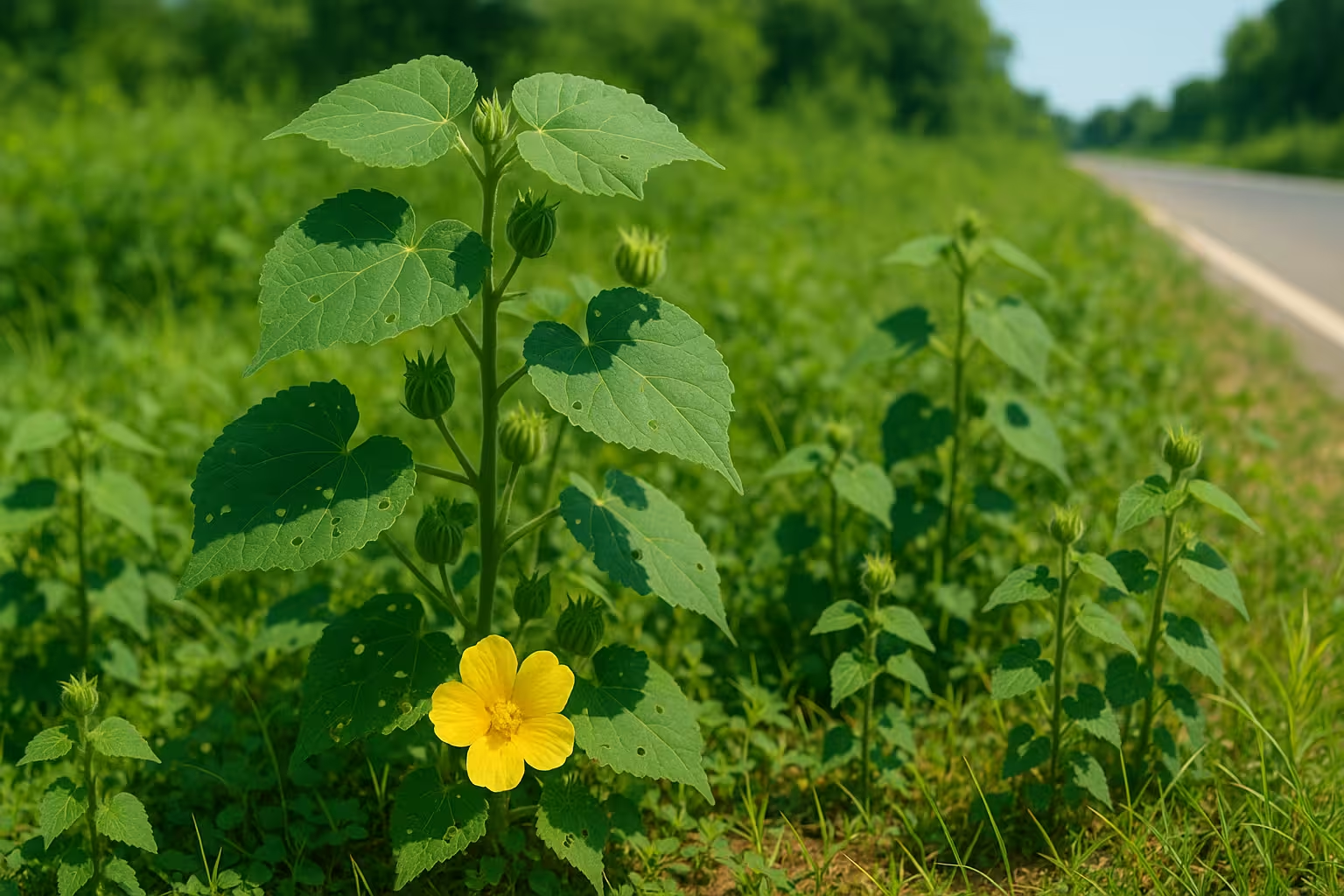
🌿 What Is Thuthi Leaf (Indian Mallow) and its Benefits?
Thuthi leaf (துத்தி இலை)is the common name for Abutilon indicum, a medicinal herb used in Ayurveda for treating piles, skin problems, and digestive issues.
Thuthi leaf benefits are widely recognized in traditional Indian medicine for their natural healing power. Also known as Indian Mallow (Abutilon indicum), Thuthi leaf is a common plant found across South India — often growing wild near homes and roadsides.
Used for centuries in Ayurveda and Siddha medicine, it’s known for its anti-inflammatory, laxative, and wound-healing properties. Today, people are rediscovering this humble herb for its ability to naturally relieve:
- Piles (Hemorrhoids)
- Constipation
- Bloating and gas
- Anal itching and burning
📑 Table of Contents
My First-Hand Experience with Thuthi Leaf Benefits for Piles
I'll never forget how this humble துத்தி இலை (Thuthi leaf) — the same one we’d walk past without a glance — became our family’s secret remedy. Not from some fancy medical book, but through a quiet exchange my uncle had with a village elder.
“This plant helps with piles,” the man said simply, plucking leaves by the roadside.
At the time, none of us realized those words would change everything.
1. How It Helped My Mother
For months, Amma suffered from persistent itching, especially after eating her favorite spicy chicken curry. We later understood these were early piles symptoms.
Her remedy was straightforward:
- 15 fresh Thuthi leaves
- 150ml water
- Blended and drunk each morning on an empty stomach
Within a week:
✅ The itching faded
✅ Her digestion improved
✅ No more discomfort after meals
We’ve also written about how Keelanelli (Keezhanelli) helped my uncle got cured naturally cured from jaundice — read that story here.
2. My Uncle's 3-Day Healing Story: How Thuthi Leaf Stopped the Bleeding
During a family gathering in Mumbai, my mom learned that my uncle had been experiencing bleeding during motion, a distressing symptom of piles.
On one of our family trips, mom spotted Thuthi leaf (துத்தி இலை) growing by the roadside near a tea shop. She immediately showed it to my aunt, who later happened to notice the same plant growing next to her home in our native village.
Curious and hopeful, my aunt prepared a fresh leaf decoction by boiling 12–15 tender Thuthi leaves in water. She gave it to my uncle to drink daily.
Within three days, the bleeding completely stopped, and my uncle felt noticeable relief from the discomfort.
This small, humble plant had worked its magic, providing a simple, natural solution that was both effective and fast-acting.
Where to Find Thuthi Leaf Plant
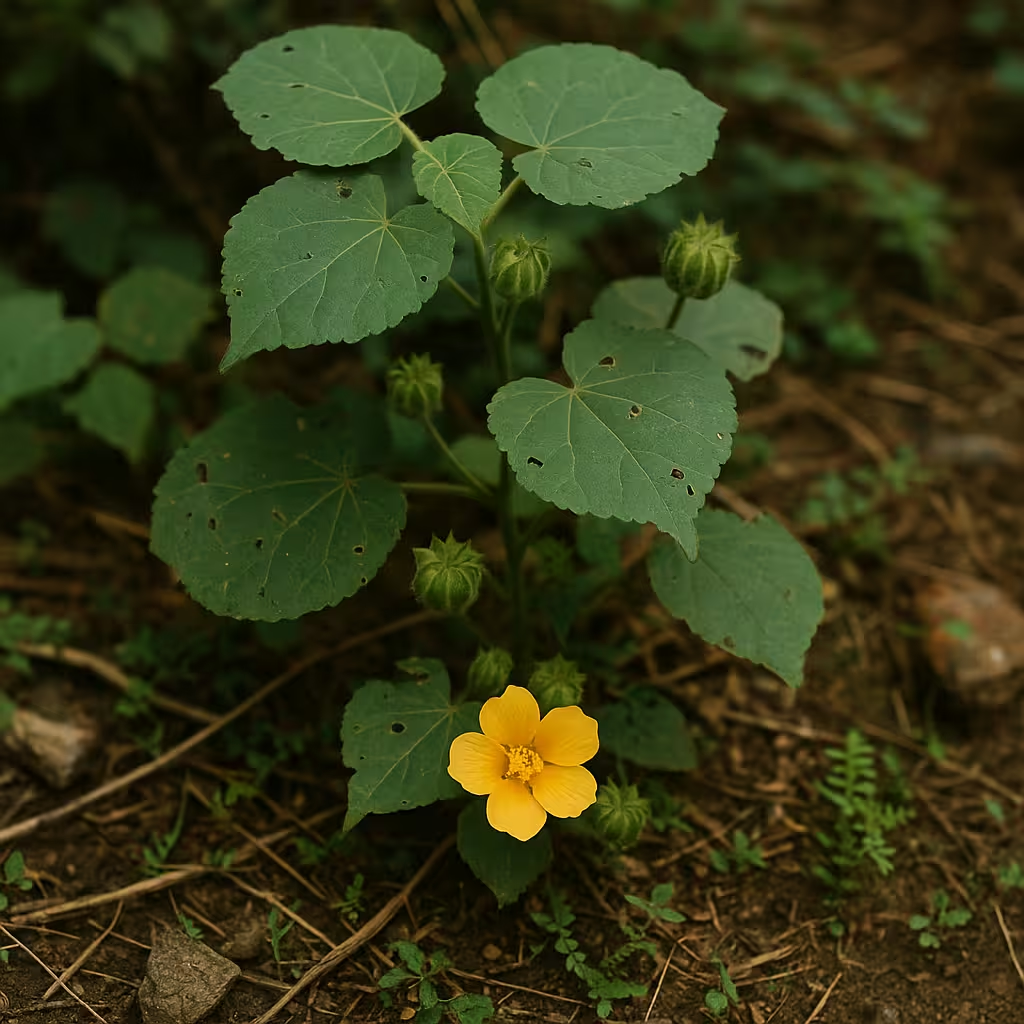
The Thuthi plant (Sida cordifolia) grows naturally in tropical and subtropical climates and can be found in many parts of India.
If you are looking to identify or collect fresh Thuthi leaves, here are some common locations:
- Roadsides and village paths – It often grows as a wild shrub along less-travelled roads.
- Near farmlands – Farmers sometimes leave Thuthi plants on the edges of fields, as they are not considered harmful to crops.
- Vacant plots and open lands – The plant thrives in open sunlight and dry-to-moderately moist soil.
- Rural gardens – In some villages, people cultivate it intentionally for home remedies.
- Near water channels – Occasionally found along the sides of irrigation canals or small water streams.
🌱 Best time to find: During and after the rainy season (July–October in most parts of India), the Thuthi plant grows quickly and produces tender leaves.
⚠️ Note: Always make sure you can correctly identify the Thuthi plant before harvesting. If unsure, consult a local herbalist or botanist.
🧾 Preparation Methods for Thuthi Leaves (துத்தி இலை)
Thuthi leaves (or Abutilon indicum) are widely valued in traditional medicine for their natural healing properties—especially for piles, constipation, and inflammation.
Here are the simplest ways to use fresh thuthi leaves or thuthi leaf powder at home:
✅ Fresh Thuthi Leaf Juice (How to use Thuthi leaf for piles)
- Pluck 10–15 fresh Thuthi leaves (young and tender ones preferred).
- Wash thoroughly.
- Mix with 150 ml of water in a mixer or by hand.
- Drink the entire mixture on an empty stomach in the morning.
📅 Duration: Continue daily for 7–10 days for noticeable benefits.
🌿 Thuthi Leaf Powder (How to use Thuthi leaf powder for piles)
- Pluck Thuthi leaves and dry them in the shade (never under direct sunlight to preserve medicinal properties).
- Once fully dry, grind them into a fine powder using a mixer.
- You can:
- Take 1 spoon of the powder directly with water.
- Or, roll the powder into small balls (about marble size) using a few drops of water, and consume 3 of them daily.
💡 Ideal for those who want to use Thuthi leaf for long-term health maintenance.
🧈 Method 3 — Thuthi Leaf with Sesame Oil (Traditional Method for “Kollupu Katti” / Internal Swelling)
This age-old preparation is said to support the healing of stubborn internal swelling or fatty lumps:
- Heat a small amount of sesame oil (Nallennai) gently — do not overheat.
- Finely chop 7 small shallots (Chinna Vengayam) and add them to the warm oil. Let them sauté lightly.
- Add 15–20 tender Thuthi leaves to the warm oil and let it infuse lightly.
- Consume this preparation once daily for 41 days.
📌 This is a deeply rooted folk remedy used in some regions of Tamil Nadu for addressing kollupu katti (internal lumps or gland swelling).
💪 Thuthi Leaf Benefits (Uses Explained Simply)
Thuthi leaf (Abutilon indicum) is widely used for piles (hemorrhoids), especially bleeding piles.
It also helps with constipation, digestion, urinary issues, skin problems, inflammation, and body strength.
Below are the main health benefits of Thuthi leaf.
1. Piles (Especially Bleeding Piles)
Helps reduce bleeding, pain, swelling, and burning sensation caused by piles.
Its natural mucilage softens stool, reduces straining, and supports healing of irritated tissues.
Commonly used as a decoction or paste during piles-related discomfort.
👉 Thuthi Powder Benefits (For Piles)
Thuthi powder, made from dried leaves, is often used when fresh leaves are not available.
It helps reduce piles-related bleeding and discomfort and supports easier bowel movement.
The powder form is easy to store, measure, and consume regularly.
2. Constipation & Digestion
Acts as a mild natural laxative, helping regular bowel movement.
Reduces bloating and gas, often used when piles are linked to constipation.
3. Urinary & Kidney Support
Supports healthy urine flow and reduces burning urination.
Gentle diuretic action helps flush excess fluids.
4. Skin & Wound Healing
Used for boils, wounds, itching, and skin eruptions.
Crushed leaves applied externally as traditional first aid (kai marunthu).
5. Muscle, Joint & Strength
Helps reduce inflammation, stiffness, and body pain.
Traditionally used to support overall strength and recovery.
6. Antioxidant & Immune Support
Contains natural antioxidants that help protect the body from oxidative stress.
Also considered a cooling herb, useful during seasonal changes.
Thuthi Leaf vs Other Piles Treatments: Cost, Benefits & Risks Compared
| Remedy | Approximate Cost | Relief | Side Effects / Risks |
|---|---|---|---|
| Thuthi Leaf (Indian Mallow) | ₹10–₹20 (if bought), free if grown at home | Reduces bleeding, swelling, and eases motion | Very mild; may cause loose motion if overused |
| Surgery (Hemorrhoidectomy) | ₹20,000 – ₹70,000 (hospital charges) | Removes piles completely (for severe cases) | Pain, bleeding, infection, long recovery |
| OTC Creams (Hydrocortisone, Lidocaine) | ₹150 – ₹500 per tube | Gives fast relief from itching/burning | Skin damage if used too long |
| Home Remedies (Sitz bath, fiber diet) | ₹0 – ₹200 (depends on food/ingredients) | Soothes pain, helps soft motion | No major risks, but works slowly |
Frequently Asked Questions
Is Indian Mallow the same as Thuthi Leaf?▼
What are some common Thuthi leaf benefits?▼
Can I boil and drink Thuthi leaves daily?▼
Is Thuthi safe for children?▼
How to use Thuthi leaves for piles treatment in Tamil traditional methods?▼
Can Thuthi leaf paste be applied on wounds or skin infections?▼
Are there any side effects of using Thuthi leaf?▼
Can Thuthi leaves be used for constipation relief?▼
How to use Thuthi leaf for piles in Tamil traditional methods?▼
Can Thuthi leaf powder support piles-related discomfort?▼
Is Thuthi leaf good for treating piles naturally?▼
⚠️ Disclaimer: This blog is based on a real-life personal story. Please consult a healthcare professional before trying any new treatment.
Related Blogs
Keezhanelli for Jaundice: My Uncle's 3-Day Healing Story
Discover how Keelanelli (Keezhanelli) naturally cured my uncle's jaundice. Learn the traditional recipe, benefits, and scientific backing for this powerful liver detox herb.
Clove for Cough: This 1 Kitchen Ingredient Stopped My Cough and Running Nose in 3 Days
Struggling with cough and running nose? This simple clove remedy gave me natural relief in just 3 days — no medicines, no side effects. Try this Ayurvedic method.
Home Remedies for Gastric Problem: Natural Relief for Gas, Bloating & Indigestion
Discover simple and effective home remedies for gastric problem. Learn how Vellapoodu (hing) and Ajwain help relieve gas, bloating, and indigestion naturally at home.