Oil in Belly Button Benefits: Uses, Best Oils & Safety Guide
July 16, 2026 18 min read
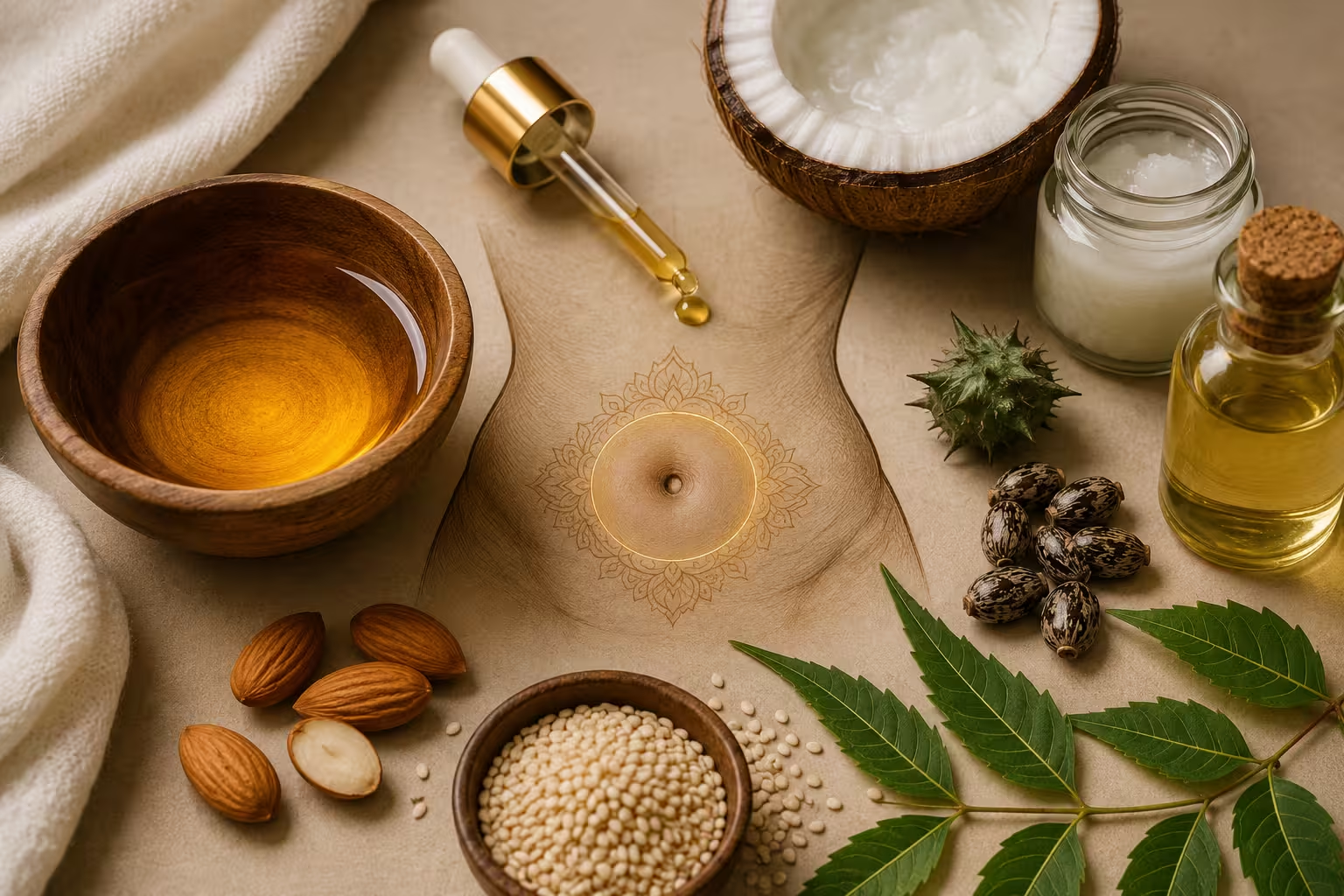
Applying oil in the belly button, also known as navel oiling, is a traditional practice followed in many Indian households for generations. Whether it's sesame (gingelly) oil, coconut oil, castor oil, or ghee, many families continue this simple bedtime ritual as part of their daily wellness routine.
This guide explores the traditional oil in belly button benefits described in Ayurveda, explains the commonly used oils, reviews what modern scientific research currently says, and separates traditional beliefs from evidence-based findings so you can make an informed decision.
We'll also share our family's experience with sesame (gingelly) oil, discuss how to practice navel oiling safely, and answer some of the most common questions about this traditional wellness practice.
📑 Table of Contents
What Is Navel Oiling?
Navel oiling, also known as applying oil in the belly button, is the traditional practice of placing a few drops of natural oil into the navel (belly button) and gently massaging the surrounding area. It has been followed in many Indian households for generations as part of a simple self-care routine, often before bedtime.
For some families, it is a daily wellness habit. Others use it only when they experience specific discomforts or as a traditional home remedy passed down through generations.
Although navel oiling has recently gained attention on social media, the practice itself is not new. It has long been associated with traditional Indian wellness practices, particularly Ayurveda.
In the following sections, we'll share our family's experience with oil in the belly button, explore what Ayurveda says about the practice, discuss its traditional benefits, review the different oils commonly used, and examine what modern scientific research currently says.
What Does Ayurveda Say About Navel Oiling?
In Ayurveda, the navel (Nabhi) is considered an important part of the body and is traditionally believed to be connected with overall balance and well-being.
Ayurveda does not view navel oiling as a one-size-fits-all practice. Instead, it recommends selecting natural oils based on factors such as a person's Prakriti (body constitution), the balance of the Vata, Pitta, and Kapha doshas, the season, and the purpose of the practice.
Because of this, different oils have traditionally been used for different needs. We'll look at these oils in detail later in this guide.
Before that, let's explore the traditional oil in belly button benefits that have been passed down through Ayurveda and Indian home remedies for generations.
Traditional Oil in Belly Button Benefits
Traditional home remedies and Ayurveda have long associated oil in the belly button (navel oiling) with overall wellness. Although most of these oil in belly button benefits are based on traditional practices and personal experiences rather than strong scientific evidence, the practice continues to be followed by many families across India.
Here are some of the most commonly mentioned traditional navel oiling benefits.
🌿 1. Traditionally Believed to Help Cool the Body
According to traditional home remedies, applying oil in the belly button is believed to help balance excess body heat. Sesame (gingelly) oil, coconut oil, and ghee are commonly chosen for this purpose because of their traditional cooling or balancing properties.
💧 2. Helps Moisturize the Skin Around the Belly Button
Applying natural oils to the belly button and the surrounding skin helps keep the area moisturized and may reduce dryness or flakiness. Coconut oil, almond oil, and olive oil are especially valued for their moisturizing properties.
😌 3. Traditionally Used to Promote Relaxation
Navel oiling is traditionally practiced before bedtime as part of a simple self-care routine. The gentle massage around the belly button may help create a calming and relaxing experience.
🍽️ 4. Traditionally Associated with Digestive Comfort
According to Ayurveda, the nabhi (navel) is considered an important point in the body. Traditional wellness practices associate oil in the belly button with supporting digestive comfort and maintaining the body's natural balance.
👁️ 5. Traditionally Used for Eye Comfort
Traditional home remedies associate gingelly oil in the belly button with relief from eye discomfort believed to be related to excess body heat.
This also reflects our family's experience. My mother began applying gingelly oil to her belly button after experiencing persistent eye irritation following cataract surgery. According to her experience, she found noticeable relief and continues the practice as part of her routine.
🚺 6. Traditionally Used for Women's Wellness
Traditional home remedies also associate oil in the belly button with supporting women's wellness. In our family, my wife applies gingelly oil to her belly button whenever she experiences discomfort that she associates with excess body heat. According to her experience, she feels more comfortable afterward and continues this traditional practice when needed.
🦴 7. Traditionally Associated with Joint and Body Comfort
Ayurveda traditionally uses oils such as sesame oil and castor oil in massage therapies to support overall body comfort. Navel oiling is also practiced as part of these traditional wellness routines.
⚖️ 8. Traditionally Believed to Support Dosha Balance
According to Ayurveda, different natural oils are selected to help maintain the balance of the Vata, Pitta, and Kapha doshas. The choice of oil depends on the individual's body constitution (Prakriti) and the purpose of the practice, which is why there is no single best oil for everyone.
Which Is the Best Oil for the Belly Button?
One of the most common questions about oil in the belly button is, "Which is the best oil to use?"
According to Ayurveda and traditional home remedies, there isn't a single oil that is suitable for everyone. The choice of oil traditionally depends on a person's Prakriti (body constitution), the purpose of the practice, the season, and family traditions.
The table below summarizes the natural oils most commonly used for navel oiling and the traditional reasons they are chosen.
Oil
Traditionally Chosen For
🌿 Sesame (Gingelly) Oil
Everyday wellness and relaxation
🥥 Coconut Oil
Cooling and skin hydration
🌰 Castor Oil
Moisturizing and massage
🌾 Mustard Oil
Warming body massage
🌰 Almond Oil
Skin nourishment
🫒 Olive Oil
Softening dry skin
🌿 Neem Oil
Traditional skin care
🧈 Ghee
Traditional nourishment and cooling
Oil
🌿 Sesame (Gingelly) Oil
Traditionally Chosen For
Everyday wellness and relaxation
Oil
🥥 Coconut Oil
Traditionally Chosen For
Cooling and skin hydration
Oil
🌰 Castor Oil
Traditionally Chosen For
Moisturizing and massage
Oil
🌾 Mustard Oil
Traditionally Chosen For
Warming body massage
Oil
🌰 Almond Oil
Traditionally Chosen For
Skin nourishment
Oil
🫒 Olive Oil
Traditionally Chosen For
Softening dry skin
Oil
🌿 Neem Oil
Traditionally Chosen For
Traditional skin care
Oil
🧈 Ghee
Traditionally Chosen For
Traditional nourishment and cooling
In the following sections, we'll explore these oils in more detail, beginning with sesame (gingelly) oil, the oil our family uses most often.
Sesame (Gingelly) Oil in Belly Button Benefits
Sesame oil, also known as gingelly oil or nallennai, is one of the most widely used oils for navel oiling in Ayurveda. It has been part of traditional Indian wellness practices for generations and is commonly chosen for everyday use.
Our Family's Experience
Among all the oils used for oil in the belly button, gingelly oil is the one our family trusts the most.
My Mother's Experience
My mother developed persistent kan erichal (eye irritation) after undergoing cataract surgery. According to her doctor, the irritation was likely caused by reduced tear production (dry eye) following the surgery.
Despite trying different eye drops and medications, the irritation kept returning.
She then started applying a few drops of gingelly oil to her belly button every night and gently massaging the area for a few minutes.
According to her experience, the irritation gradually reduced, and she continues this practice even today as part of her daily routine.
My Wife's Experience
My wife also follows the same traditional practice, but for a different reason.
Whenever she experiences discomfort that she associates with excess body heat, she applies gingelly oil to her belly button before bedtime.
According to her experience, she feels more comfortable afterward and continues this practice whenever she feels the need.
Note: These are our family's personal experiences. Individual results may vary. Persistent eye irritation, urinary symptoms, or other health concerns should always be evaluated by a qualified healthcare professional.
What Ayurveda Says
According to Ayurveda, sesame (gingelly) oil is highly valued for its nourishing properties and is traditionally associated with balancing Vata dosha. It is widely used in Abhyanga (Ayurvedic oil massage) and other traditional wellness practices.
Because of these traditional properties, gingelly oil in the belly button has long been used as part of daily self-care routines in many households.
What Does Science Say?
Modern research shows that sesame oil contains natural fatty acids, antioxidants, and vitamin E, making it an excellent moisturizer for the skin.
However, there is currently no strong scientific evidence that applying sesame oil in the belly button treats eye irritation, urinary problems, digestive disorders, or other internal medical conditions.
Most of the claimed sesame oil in belly button benefits are based on Ayurvedic traditions and personal experiences rather than clinical studies.
Other Popular Oils Used for Navel Oiling
Besides sesame (gingelly) oil, several other natural oils are traditionally used for oil in the belly button (navel oiling). According to Ayurveda and traditional home remedies, each oil is chosen for different reasons depending on a person's needs, body constitution (Prakriti), and the purpose of the practice.
🥥 Coconut Oil in Belly Button Benefits
Coconut oil is traditionally valued for its cooling nature and moisturizing properties. It is commonly chosen when a cooling oil is preferred and is widely used to keep the skin around the belly button soft and hydrated. While coconut oil is an excellent skin moisturizer, scientific evidence does not currently support claims that applying it to the navel treats internal health conditions.
🌰 Castor Oil in Belly Button Benefits
Castor oil is traditionally used in Ayurveda for its rich, nourishing nature and is often included in massage and wellness practices. Some people also use castor oil in the belly button as part of their bedtime routine. However, there is no strong scientific evidence that applying castor oil to the navel provides the internal health benefits often claimed online.
🌾 Mustard Oil in Belly Button Benefits
Mustard oil is traditionally regarded as a warming oil. It is commonly chosen during colder seasons or when a warming oil is preferred. Because mustard oil can irritate sensitive skin, it should be used with caution and avoided on broken or inflamed skin.
🌰 Almond Oil in Belly Button Benefits
Almond oil is traditionally used to nourish and moisturize the skin. Rich in vitamin E and healthy fats, it is often chosen by people looking for a gentle oil for regular navel oiling.
🫒 Olive Oil in Belly Button Benefits
Olive oil is another natural oil used for oil in the belly button. It is well known for its moisturizing and antioxidant properties and is commonly chosen to help keep the skin soft and hydrated.
🌿 Neem Oil in Belly Button Benefits
Neem oil has traditionally been used in skin-care practices because of its cleansing properties. Due to its potency, it is generally used in small amounts and should not be applied to irritated or broken skin.
🧈 Ghee in Belly Button Benefits
Ghee has an important place in Ayurveda and is traditionally associated with nourishment and balance. Some families use ghee in the belly button as part of their wellness routine, believing it supports overall comfort and skin hydration.
What Does Science Say About Oil in the Belly Button?
Although oil in the belly button (navel oiling) has been practiced for generations, modern scientific research on this specific practice is still limited.
The skin around the belly button can absorb small amounts of substances applied to it, just like the skin on other parts of the body. However, there is no scientific evidence that the belly button is a unique pathway through which oils travel directly to internal organs or treat diseases.
Natural oils such as sesame oil, coconut oil, almond oil, and olive oil are well known for their moisturizing properties. Applying these oils can help keep the skin soft and hydrated, while the gentle massage involved in navel oiling may promote relaxation.
At present, clinical studies have not confirmed that applying oil to the belly button can treat conditions such as eye irritation, digestive disorders, infertility, urinary tract infections, or chronic medical conditions.
This does not invalidate traditional practices or personal experiences. Instead, it means that more high-quality scientific research is needed to understand how and whether these traditional benefits can be explained by modern medicine.
How to Apply Oil in the Belly Button
Applying oil in the belly button (navel oiling) is a simple traditional practice. If you would like to try it, follow these basic steps.
1. Clean the Belly Button
Wash the belly button with mild soap and water, then dry it thoroughly. Avoid applying oil if the area is dirty, irritated, or infected.
2. Choose the Right Oil
Select a natural oil based on your preference or traditional use. Sesame (gingelly) oil, coconut oil, castor oil, mustard oil, almond oil, olive oil, neem oil, and ghee are commonly used for navel oiling.
3. Apply a Few Drops
Place 2–3 drops of the chosen oil into the belly button.
4. Massage Gently
Using clean fingers, gently massage the belly button and the surrounding area for 2–3 minutes. Avoid pressing too hard.
5. Leave the Oil On
Many people prefer to leave the oil on overnight as part of their bedtime routine. If you prefer, you can wipe away any excess oil after 20–30 minutes.
How Often Should You Apply Oil?
There is no standard medical recommendation for how often to practice navel oiling. Traditional routines vary from person to person.
Some people apply oil:
Daily before bedtime
A few times a week
Only when they want to include it as part of their self-care routine
Choose a routine that feels comfortable for you, and stop if you notice any irritation.
Frequently Asked Questions
What are the benefits of putting oil in the belly button?▼
According to Ayurveda and traditional home remedies, oil in the belly button is believed to support overall wellness, promote relaxation, moisturize the skin, and help balance the body's doshas. Scientific evidence supporting these broader health claims is currently limited.
Which is the best oil for the belly button?▼
There isn't a single best oil for everyone. Ayurveda traditionally recommends choosing oils based on an individual's body constitution (Prakriti), the purpose of use, and the season. Sesame (gingelly) oil, coconut oil, castor oil, mustard oil, almond oil, olive oil, neem oil, and ghee are commonly used.
Can I put sesame (gingelly) oil in my belly button every day?▼
Many people traditionally apply sesame (gingelly) oil to the belly button as part of their daily bedtime routine. If you have sensitive skin or any skin condition around the navel, consult a healthcare professional before regular use.
Does applying oil in the belly button help with eye irritation?▼
Traditional home remedies associate gingelly oil in the belly button with relief from eye discomfort related to excess body heat. Our family has had a positive personal experience with this practice. However, there is no strong scientific evidence proving it treats eye irritation. Persistent eye problems should be evaluated by an eye specialist.
Can coconut oil be applied to the belly button?▼
Yes. Coconut oil is commonly used for navel oiling because of its moisturizing and traditionally cooling properties. It also helps keep the skin around the belly button soft and hydrated.
How do you apply oil in the belly button?▼
Clean and dry the belly button, apply 2–3 drops of your chosen oil, and gently massage the surrounding area for 2–3 minutes. Many people traditionally perform navel oiling before bedtime.
Is there any scientific evidence for oil in the belly button benefits?▼
Research supporting many of the traditional health benefits of navel oiling is limited. While applying oil can moisturize the skin, most other claimed benefits are based on Ayurveda, traditional home remedies, and personal experiences rather than strong clinical evidence.
Can oil in the belly button cure diseases?▼
No. Navel oiling should not be considered a cure for any disease. It is a traditional wellness practice and should not replace professional medical diagnosis or treatment.
Who should avoid putting oil in the belly button?▼
Avoid applying oil to broken, infected, or irritated skin around the navel. If you have allergies to a particular oil or have an existing medical condition, consult a healthcare professional before trying navel oiling.
Can I leave oil in my belly button overnight?▼
Yes. Many traditional wellness routines recommend applying oil before bedtime and leaving it overnight. If irritation develops, wash the area and discontinue use.
Conclusion
Oil in the belly button (navel oiling) has been practiced for generations in Ayurveda and many Indian households. Different oils such as sesame (gingelly) oil, coconut oil, castor oil, mustard oil, almond oil, olive oil, neem oil, and ghee are traditionally chosen based on individual needs and family traditions.
In our family, gingelly oil has been part of our daily wellness routine for years. We shared our mother's and wife's experiences to explain why this traditional practice continues to be followed in our home. While these experiences have been meaningful to us, they are personal experiences and should not be considered scientific proof.
Current scientific evidence on oil in the belly button benefits is still limited. However, natural oils are known to moisturize the skin, and the gentle massage involved in navel oiling can be a relaxing self-care ritual.
If you choose to practice navel oiling, think of it as a traditional wellness habit rather than a replacement for medical treatment. For persistent or serious health concerns, always seek advice from a qualified healthcare professional.